Grace Hotel welcoming event and elevator power outage
Falling For The CEO: BAD BOY ROMANCEThe Grace Hotel welcoming event and elevator power outage brings together the book’s central romantic and workplace conflicts in a single night. William King arrives at the Grace Hotel in Cape Town to represent the hotel’s new management and reduce its troubled operations, while Diana Jones attends reluctantly because her brother Connor Jones has asked her to support him. Their accidental confinement creates immediate intimacy, but the later revelation that William is the incoming manager—and therefore a threat to Diana’s job—reverses the encounter’s emotional meaning.
Causes and Background
The event is organized to welcome William King to the Grace Hotel and place the hotel’s name before the media while he addresses its troublesome operations. William regards such functions as necessary to business success even though he dislikes his father’s display of wealth. The banquet hall is designed as an extravagant public spectacle, with fairy-lights, sparkling chandeliers, midnight-blue draping, champagne, tuxedos, evening gowns, and formally attentive waiters. The celebration therefore presents William not simply as a new employee but as the visible representative of an institutional attempt to restore confidence in the hotel.
Diana Jones enters the evening under pressure rather than in a celebratory mood. She is already running late after her hotel shift and has had to find an empty room in which to change. Her brother Connor Jones is expecting her at the welcoming event, and she fears disappointing him. More seriously, she knows that William’s arrival threatens the staff: he has come to trim the hotel’s workforce, and she believes she is among the employees most likely to be dismissed. The event’s polished surface consequently conceals an economic crisis. The guests celebrate continuity and prestige while the employees move through the room performing damage control.
What Happens
Diana reaches the elevator just before its doors close and asks for it to be held. Once inside, she almost collides with the man already occupying it. She is immediately distracted by his dark, wind-blown hair, blue-green eyes, height, tailored suit, and striking smile. Her attraction is so sudden that she forgets to thank him and realizes only after a moment that she has been staring at him. The encounter begins as an anonymous flirtation between two strangers, intensified by the confined setting and the long workday both have endured.
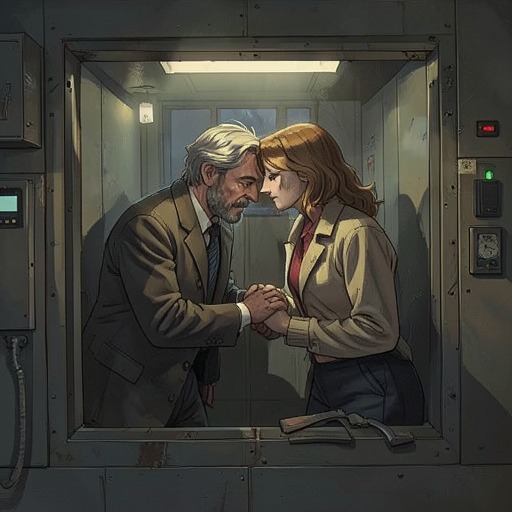
The elevator abruptly stops, and the lights go out. Diana loses her balance, strikes her head against the back wall, and is caught and lowered to the floor by William. The physical accident makes the situation dangerous before either character understands its cause. Diana is dizzy from the blow, but the deeper threat is her claustrophobia: being trapped in an enclosed space makes her feel unable to breathe. She tries to control herself by breathing slowly and insisting that the injury is only a bump on the head.
William uses his phone as a dim light, but he has no reception. Diana points out the red emergency button, and he presses it, speaking with the static voice on the intercom. The hotel staff explains that the entire grid has lost power and that the hotel generator has also failed; rescue may take up to thirty minutes. William sits beside Diana on the elevator floor. His physical proximity and scent heighten her attraction, while she tells herself that her pounding heart is caused by the enclosed elevator rather than by him. Their conversation turns from the malfunction to the celebration below, and Diana’s scorn for the festivities signals that she is not merely frightened: she is angry about the institutional spectacle and what William’s appointment may mean for the workers.
The generator returns after thirty minutes. The event has continued despite the outage, although tired staff have been forced to manage the disruption. William later learns that people were trapped in the elevator but does not tell the frightened young employee that he was one of them. The incident thus remains partly concealed within the larger reception, even as it has already altered the relationship between the two people involved.
Recognition and Reversal
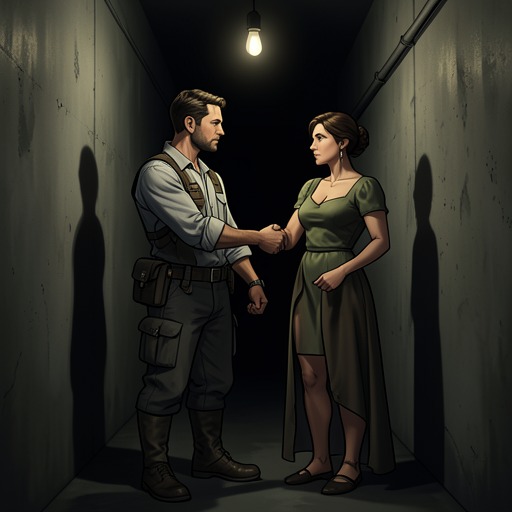
After leaving the elevator, Diana and William encounter Connor Jones in the banquet hall. Connor identifies William as the reason for the gathering, and Diana takes a full minute to understand that the man with whom she has just shared an intimate crisis is William King. William confirms his identity and shakes Connor’s hand. Diana then reveals that Connor is her brother. The two strangers are suddenly reclassified: William is Connor’s employer, Diana is Connor’s sister, and the attractive man from the elevator is the manager whose decisions may determine Diana’s employment.
The recognition changes Diana’s response to William. Earlier, she had imagined him as a possibility; after learning who he is, she sees him as the enemy. She responds coldly when he suggests that they may speak later, while William remains unaware of the full extent of her anxiety. Connor leads him away to meet the guests William must win over, and Diana leaves the event. Her embarrassment is compounded by the professional danger: she has flirted with the man who may fire her.
The conflict later becomes explicit when William discovers Diana’s employee profile while reviewing staff records. A photograph makes him realize that the woman he met at the event and the employee in the hotel office are the same person. He concludes that Diana had lied about why they could not date. In his interpretation, she had claimed that William was her brother’s boss while concealing the fact that he was her own boss. Because Julia Brown had previously deceived him, the discovery causes him to transfer old distrust onto Diana. The elevator encounter’s initial vulnerability is therefore replaced by suspicion.
Consequences and Aftermath
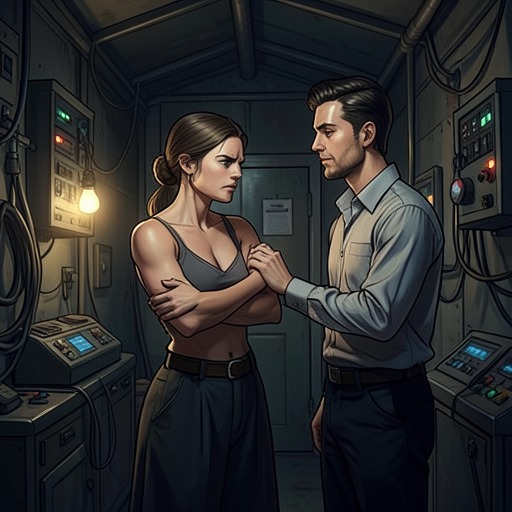
The event establishes the workplace boundary that Diana initially tries to enforce. She tells William that their attraction is a bad idea because he is her brother’s boss and hers as well. William is disappointed but says that he understands, and the pressure between them remains unresolved. The power outage has physically trapped Diana with William; the later employment revelation traps their attraction inside a hierarchy of authority, job insecurity, and possible dismissal.
Diana’s fear of losing work is rooted in more than immediate financial uncertainty. After the deaths of her parents, Cora Jones and Derek Jones, in the car crash, she fell into severe depression, lost a university scholarship, and withdrew from her second year. Connor forced her to accompany him to work at the hotel, initially refusing to leave her house unless she went with him. Through Kate and the other concierges, Diana learned that she enjoyed advising guests, planning trips, and guiding visitors through Cape Town’s history and culture. The role allowed her to move from merely surviving to living again. William’s arrival therefore threatens the structure that helped restore her, not just a routine job.
The event also creates a family parallel between Diana and William. Diana knows that Connor’s mother, Luna Jones, left Connor after a diagnosis of bipolar disorder, and that Connor became deeply family-oriented after experiencing abandonment. William later explains that his own mother left after refusing the responsibilities of parenthood and now contacts him only on his birthday if she remembers. These histories help explain why family loyalty and abandonment carry unusual force in the romantic conflict that begins at the hotel.
William’s later relationship with Diana is further complicated by his concealed history with Julia Brown. Julia reveals that she once worked at the Grace Hotel while travelling with her husband, and that her husband was William King. When Diana confronts William after meeting Julia, she also believes Julia’s claim that William has a child. William denies being a father, because the child he once believed was his was revealed not to be biologically his. The pattern of mistaken identity and withheld truth that begins in the elevator consequently expands into a larger struggle over professional identity, marriage, parenthood, and trust.
Narrative Significance
The welcoming event functions as the story’s first major value reversal. It begins with attraction and possibility, shifts into physical fear during the outage, and ends with the threat of professional harm. The same confined space that allows Diana and William to speak without the social performance of the banquet also exposes Diana’s vulnerability and encourages an intimacy neither has planned. Once the doors open, however, social roles return with greater force: William becomes manager, Diana becomes employee, and Connor becomes the familial and professional link between them.
The contrast between the reception’s glamour and the failing infrastructure embodies the event’s central irony. The banquet advertises control, efficiency, and institutional prestige, yet the hotel’s power grid and generator fail, leaving guests and workers to manage the consequences. William is welcomed as the person expected to repair the institution, but his first meaningful experience there is helplessness inside a stalled elevator. Diana, meanwhile, appears to be the vulnerable person in need of rescue, yet she is the one who identifies the emergency button and later understands the employment danger most clearly.
The outage also foreshadows the book’s larger treatment of truth and trust. In darkness, Diana and William encounter one another before knowing the labels that govern their behavior. In the light of the banquet hall, those labels reorganize the encounter into an office conflict. Their attraction survives the first revelation but is damaged by subsequent discoveries about concealed employment, Julia Brown, marriage, and parenthood. The event is therefore not merely a meet-cute or a workplace malfunction; it is the initiating scene in which intimacy is created by accident and then threatened by the identities that the characters have been unable, or unwilling, to disclose.